Skip to product information
1 of 3

Antler XL

Antler XL

Regular price £20.00
Regular price Sale price £20.00
Sale Sold out
Taxes included. Shipping calculated at checkout.

Free UK delivery on orders over £30

100% Natural Responsibly Sourced Family Run
Quantity

Estimated back in stock: Mid October

Goes well with

View full details

Description

Dental HealthHypoallergenicLong LastingLow Fat

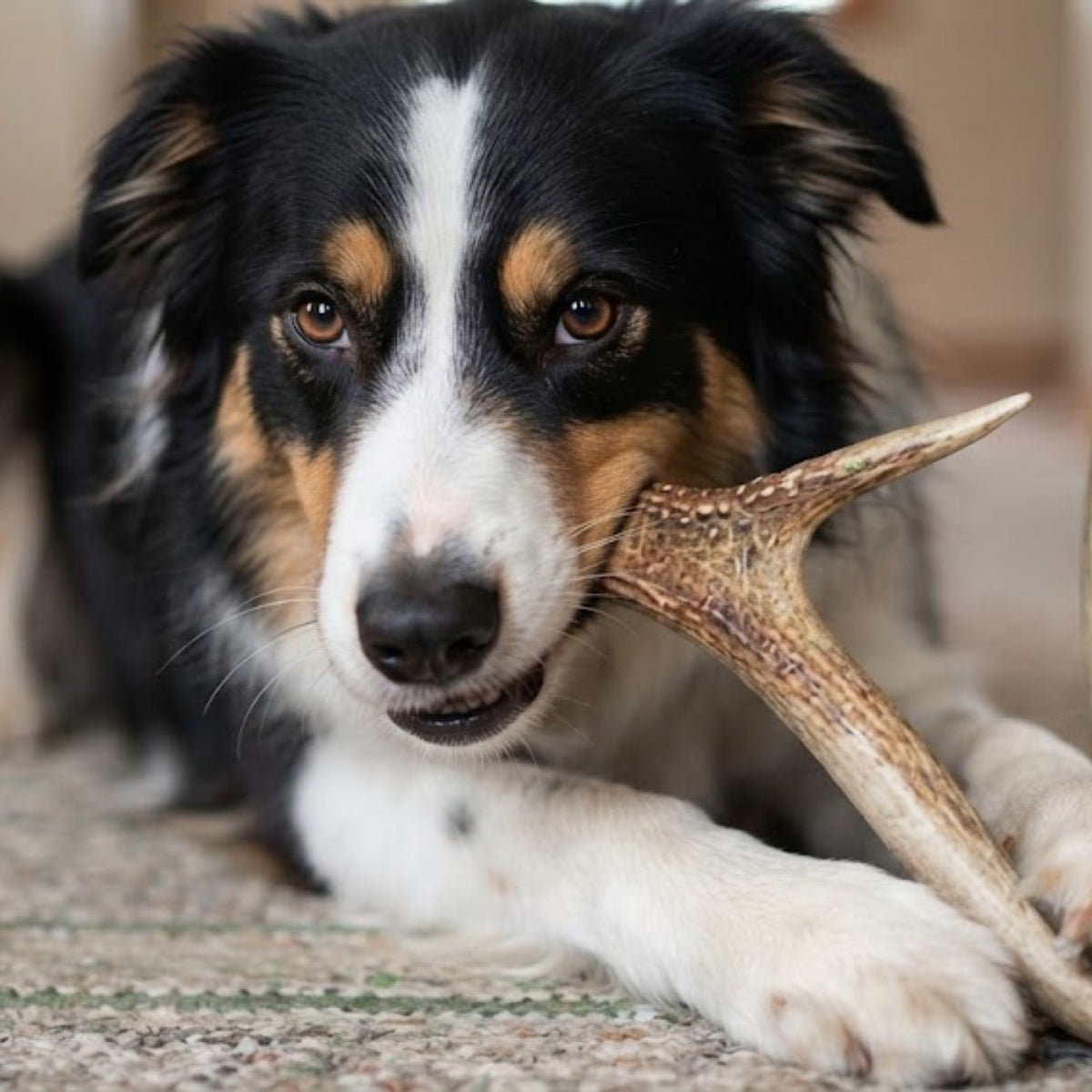
Our XL Whole Antler is the toughest chew we sell, and the longest lasting by a distance. Deer drop their antlers every year and grow a fresh set, so nobody got hurt and no deer is short of a pair. Each one is a dense, solid piece of antler that a determined dog will be working on for weeks rather than minutes.

Key features

  • Around 200g an antler. As a natural product, sizes vary.
  • One ingredient. Naturally shed deer antler. No additives, no preservatives.
  • Barely any fat. Just 0.1% fat, which puts it in our low fat range, and means no greasy marks on the carpet.
  • Lasts for months. Our own two have had the same antler on the go for around three months. A big, powerful chewer will get through one faster.
  • Naturally mineral rich. Antler is solid, naturally grown bone.
  • No smell, no mess. One for the sofa as well as the garden.

Worth knowing

Antler is properly hard, so it suits a steady gnawer aged 6 months and over. If your dog likes to bite down hard, the Yak Bar softens as they chew, and our long lasting range has plenty more to choose from.

Suitable for dogs from 6 months, with supervision.

Please supervise your dog while they enjoy this treat, and make sure fresh water is always available. As a natural product, size, shape and colour may vary.

Wondering whether an antler suits your dog? We've written an honest guide: Are antlers good for dogs?

Questions We Get Asked +

Are antlers safe for dogs?

It depends entirely on how your dog chews, and we would rather say that plainly than pretend otherwise. Antler is harder than tooth enamel. A dog who bites down hard on one can fracture a tooth. Plenty of vets say avoid antlers altogether, and we would rather you heard that from us.

So which dogs suit them?

Gnawers, not crunchers. A gnawer works at the surface steadily with the side teeth. A cruncher tries to break the thing in half. If you have watched your dog destroy a bone or a hard toy by biting down on it, buy a paddywack or a beef pizzle instead.

How long should I let my dog chew on one?

An hour at a time, then away in the cupboard. That keeps its novelty and limits the total wear on their teeth. Watch the first session properly, from the same room, and take it away if you see crunching rather than gnawing.

Antlers or bones?

An antler is more durable and does not splinter the way a cooked bone can, which is why we sell one and not the other. It is also naturally shed, so no animal is harmed for it. But it is harder, so the tooth risk is real in a way it is not with a softer chew.

What age can a dog start?

From six months, whatever the size. An antler is a hard chew, and a puppy's adult teeth need to be fully through before they take one on, which happens at around six months. You will see antlers sold as suitable for younger puppies, but we would rather you waited.

When they do start, supervise the first few sessions properly. And if you are unsure, wait. Nothing is lost by giving it another month.

An antler is not a teething chew. If your puppy is chewing everything because their gums hurt, a paddywack or a pig snout will do far more good and carries none of the risk.

Composition +
100% Antler
Analytical Constituents +
Protein 36% Fat 0.1% Collagen 22%
Feeding Instructions +
Give under supervision and always with fresh water nearby. Take the chew away once it has been worn down small enough to swallow, and let your dog rest between sessions rather than leaving it down all day. As a natural product, size, shape and colour vary from one to the next.